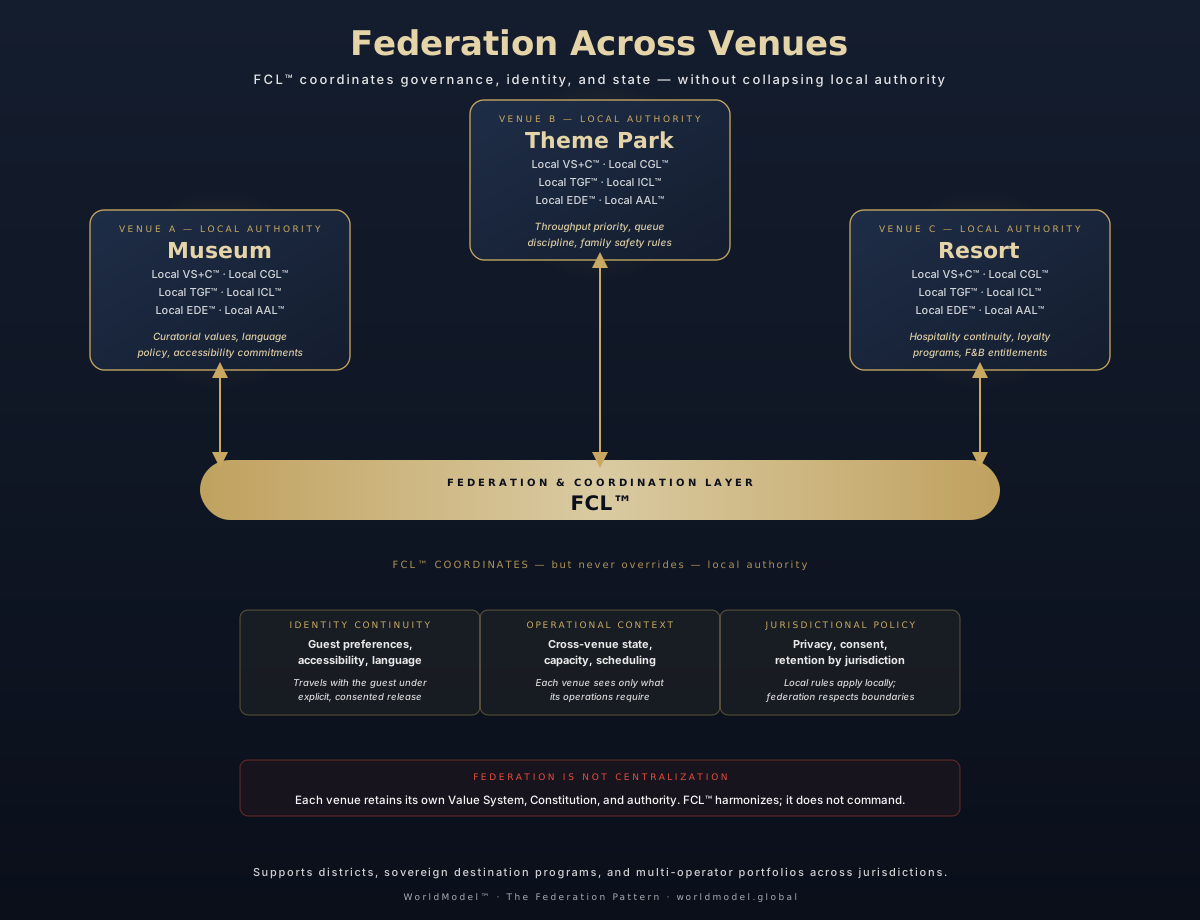
FCL™ coordinates governance, identity, and operational state across venues, operators, and jurisdictions — without collapsing local authority.
Federation is the architectural property that makes WorldModel™ acceptable to sovereign destination programs, multi-operator districts, cruise lines, and resort portfolios. Each participating venue retains its own VS+C™, its own CGL™, its own TGF™, its own ICL™, its own EDE™, and its own AAL™. Local authority stays local. FCL™ coordinates the categories of state that do travel between venues: consented identity continuity, shared operational context, and jurisdictional policy metadata.
Federation operations are proposals to each participating venue’s CGL™, subject to local approval. A federation-level proposal that would violate a local venue’s Value System, Constitution, consent state, or jurisdictional policy is rejected by that venue’s CGL™. FCL™ has no override authority. This is the mechanism by which a sovereign program can adopt the framework across multiple operators without imposing one operator’s policy on another.
Three bands at the bottom of the diagram show what travels through federation: identity continuity (the guest’s preferences, accessibility profile, and language under consent), operational context (cross-venue capacity and scheduling), and jurisdictional policy (rules that apply locally even when guests transit between jurisdictions). The coral warning band at the bottom states the property explicitly: federation is not centralization.